From Acceptance to Accountability: Why Drunk Driving Persists — and How Prevention Can End It
For decades, we have treated drunk driving as a tragic but inevitable feature of South Africa’s road culture.
We absorb festive season statistics with grim familiarity.
We mourn lives lost.
We call for tougher laws.
And then, quietly, we return to the status quo.
In a previous article, I explored how drunk driving has become socially tolerated — normalised through language, habit, and a collective belief that “it won’t happen to me.” It is a culture sustained not by ignorance, but by repetition.
That culture remains firmly in place.
Recent data from the 2025/26 festive season paint a concerning picture of behaviour on our roads. Transport Minister Barbara Creecy reported that 8 561 drivers tested positive for alcohol, a 144% increase in positive alcohol reading compared to the previous festive period – demonstrating that the problem of impaired driving is acute. The Minister’s announcement of her intention to amend Section 65 of the National Road Traffic Act, reflect a growing recognition that the current approach is failing. Stronger legislation is necessary and welcome.
But legislation alone will not change outcomes.
Drunk Driving Is a Behaviour Problem — Not a knowledge Gap.
Most people who drive under the influence already know it is illegal.
They understand the risks.
They have heard the warnings.
They have seen the consequences.
Yet the behaviour persists.
This exposes a hard truth: drunk driving is not primarily a legal or educational failure — it is a behavioural failure that occurs the moment the driver starts a vehicle.
The danger does not begin on the road.
It begins when an impaired person is still allowed to start a car.
Why Enforcement After the Fact Fails
Traditional road safety strategies rely on detection and punishment after a driver has already placed lives at risk.
Roadblocks, arrests, fines, and prosecutions are reactive by design. Even the most rigorous enforcement regime cannot prevent every impaired driver from entering traffic.
As a result, the same cycle repeats year after year: enforcement follows tragedy, not prevention.
If we want different results, we must intervene earlier — before a vehicle ever moves.
Prevention must be built into the Vehicle.
Drunk driving requires preventive, in-vehicle solutions, not only harsher penalties.
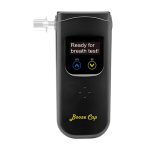
This is where technologies like Booze Cap fundamentally change the equation.
Booze Cap is designed to stop impaired driving before it happens by preventing a vehicle from starting if alcohol is detected. It removes subjective judgement at the most dangerous moment and replaces it with objective, real-time accountability.
Rather than relying on chance enforcement, Booze Cap ensures compliance automatically — every time the ignition is engaged.
In doing so, it complements legislative reform by operationalising the intent of the law in real-world conditions.
From Policy Intent to Practical Impact
Laws express what society expects.
Technology ensures those expectations are met.
Seatbelts reduced fatalities not because they were mandated alone, but because they were engineered into vehicles. Speed compliance improved when technology enforced limits rather than relying on restraint.
The same principle applies to drunk driving.
By embedding prevention into the driving experience itself, solutions like Booze Cap transform drunk driving from a socially negotiated risk into a non-negotiable impossibility.
This is not about punishment.
It is about protection.
It is about stopping harm before it begins.
Ending the Culture Requires Systems, Not Slogans
Public campaigns and awareness messaging play a significant role, but they cannot override impaired decision-making.
Ending the culture of drunk driving requires systemic safeguards that support responsible behaviour — even when judgement is compromised.
Booze Cap does not replace the law.
It strengthens it.
It does not undermine drivers.
It protects them — and everyone else on the road.
Stronger Laws Need Stronger Tools
The intention to strengthen Section 65 of the National Transport Act is a positive signal of leadership.
But meaningful change will only occur when legislation is paired with tools that enforce compliance before tragedy occurs.
If South Africa is serious about reducing road deaths, it must move beyond reacting to drunk driving and start preventing it. Real change does not happen in courtrooms or crash reports.
Real change starts before the ignition.
Booze Cap: Preventing drunk driving at the source.
By Sally Mazhandu